Saguaro Ranch sits in the Tortolita Mountains of Marana, Arizona, within a region that has protected its night skies through law and practice for more than five decades. Residents experience genuinely dark, star-filled skies as a feature of daily life, not an exception to it. This page explains why the Tucson night sky is exceptional, how that protection works, and what it means to live within it.
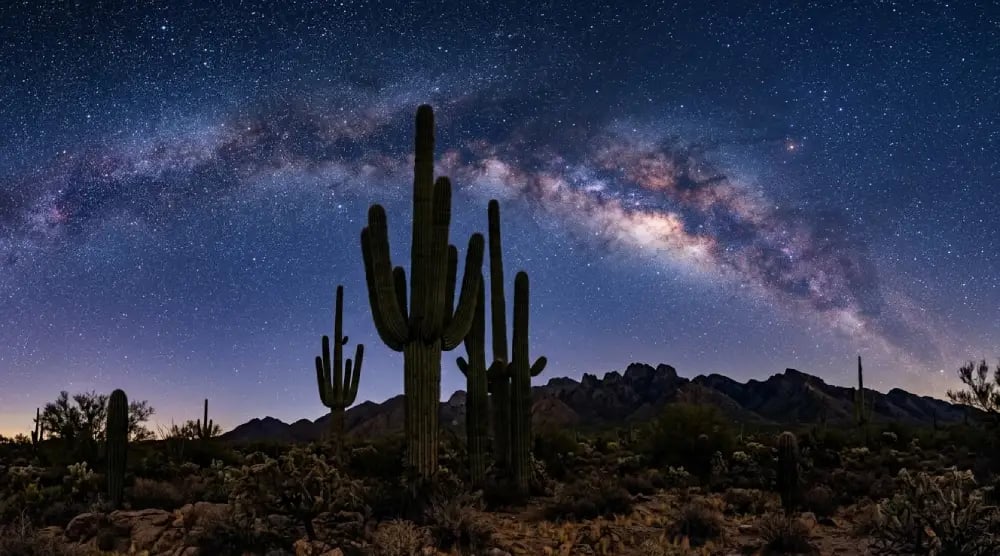
Be Enchanted by the Starry Skies of Saguaro Ranch
In a world where light pollution is on the rise, finding a place to truly experience the night sky has become increasingly rare. Thanks to Pima County’s Dark Sky Ordinances, Saguaro Ranch is one of the few places where the brilliance of the cosmos remains untouched. Here, the night sky comes alive, offering a mesmerizing display of twinkling stars, distant galaxies, and the breathtaking glow of the Milky Way.
TUCSON: THE ASTRONOMY CAPITAL OF THE WORLD
Tucson's reputation as a center for astronomical research is well established. The region is home to some of the most significant observatories in the Western Hemisphere, including Kitt Peak National Observatory, Mount Graham International Observatory, Fred Lawrence Whipple Observatory, Steward Observatory, and Mount Lemmon Observatory. These facilities operate some of the world's most advanced telescopes and contribute to research in astrophysics, cosmology, and planetary science.
Tucson is also the global headquarters of DarkSky International, the nonprofit organization formerly known as the International Dark-Sky Association. Founded in Tucson in 1987 by two local astronomers, DarkSky International works with governments, communities, and parks around the world to limit light pollution through policy, education, and certification programs.
The University of Arizona's astronomy and space science programs are ranked among the best in the United States, and the broader Tucson community has maintained an active culture of amateur and professional stargazing for generations.
A Lighting Code Adopted More Than 50 Years Ago
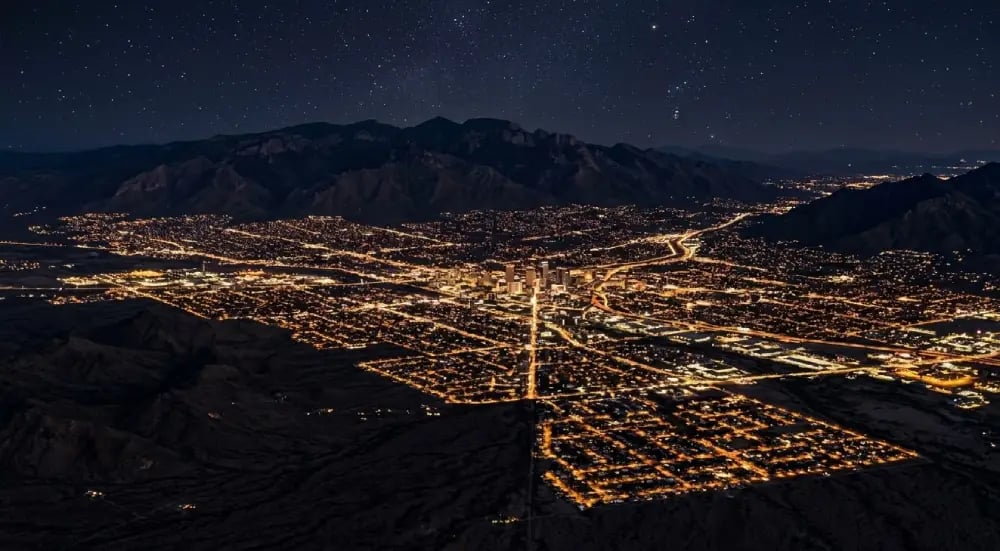
In 1972, Tucson and Pima County adopted outdoor lighting ordinances specifically designed to reduce light pollution that was interfering with astronomical research at nearby Kitt Peak and other facilities. Tucson became the first city in the world to enact an ordinance addressing light pollution for the purpose of protecting space observation.
The code has been updated several times since, most recently in 2024. It applies to all outdoor lighting throughout the City of Tucson and unincorporated Pima County. Key requirements include:
Fixtures must be full-cutoff, meaning no light is permitted to escape above 90 degrees. Light sources are restricted to warm color temperatures, with rated color temperature not exceeding 3,500K. Total light output is limited per acre based on zoning classification, with the most restrictive standards applied to areas near observatories and protected lands. The code is legally enforceable and carries fines for non-compliance.
Pima County's outdoor lighting standards are widely regarded as some of the most rigorous in the United States. For residents of Saguaro Ranch, this means the surrounding community, including neighboring municipalities and commercial properties, is legally bound to the same standards that protect the view from your homesite.
The purpose of this code is to preserve the relationship of the residents of the City of Tucson, Arizona and Pima County, Arizona to their unique desert environment through protection of access to the dark night sky.
Source: Pima County Outdoor Lighting Code
Saguaro National Park: A Certified Urban Night Sky Place
In November 2023, DarkSky International certified Saguaro National Park as an Urban Night Sky Place — only the ninth site in the world, and only the second within the National Park System, to receive this designation. The Urban Night Sky Place program recognizes sites near or surrounded by large urban areas that actively protect and promote an authentic nighttime experience despite proximity to significant artificial light.
Saguaro National Park protects more than 94,000 acres of Sonoran Desert habitat. Its two units, the Rincon Mountain District to the east and the Tucson Mountain District to the west, flank the city of Tucson. The certification was supported by the University of Arizona, Pima County, the City of Tucson, the Tucson Amateur Astronomy Association, and the Sky Island Alliance, among others.
The park's certification required a detailed lighting audit of its 187 outdoor fixtures, satellite imaging of nighttime light levels, and on-the-ground sky quality measurements. Close to half of the park's fixtures required retrofits to meet DarkSky standards before certification was granted.
Saguaro Ranch is located approximately 25 miles from Saguaro National Park. The same regional ecosystem of ordinances, observatory protections, and community standards that earned the park its designation extends to the Tortolita Mountains where Saguaro Ranch sits.
A COMMUNITY IMMERSED IN NATURE
With over 80% of its 1,200-acre expanse left completely untouched, Saguaro Ranch is a sanctuary of natural beauty. Thoughtfully designed to minimize light pollution, the community ensures that residents can experience clear, star-filled skies every night.
Just 45 minutes from Saguaro Ranch lies Saguaro National Park, one of only nine Urban Night Sky Places in the world, and the second within the National Park System to earn this prestigious designation.
At Saguaro Ranch, we embrace a “National Park Mindset,” a philosophy of preserving the beauty, privacy, and integrity of our environment, including the night sky. Every home follows dark-sky-friendly guidelines, ensuring that lighting is thoughtfully designed to enhance, rather than diminish, the natural nocturnal experience.
Why Dark Skies Matter for the Sonoran Desert Ecosystem
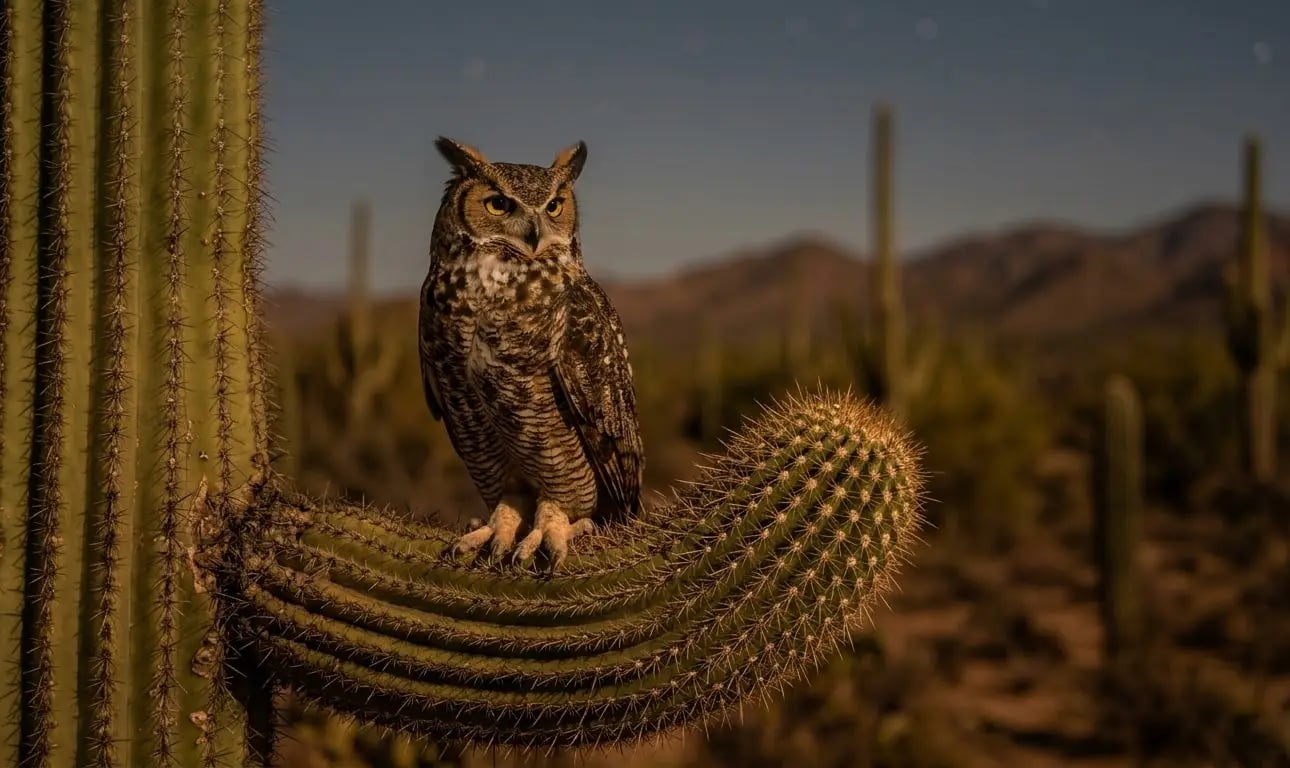
Light pollution affects more than the human experience of the night sky. Research has documented that artificial light at night disrupts bird migration patterns, affects predator-prey dynamics, and alters the behavior of nocturnal species including bats, owls, insects, and reptiles. In desert ecosystems, where many species are nocturnal by adaptation, this disruption can cascade through an entire food web.
Bats, which are native to the Tortolita Mountains and essential pollinators in the Sonoran Desert, are particularly sensitive to artificial light. Many bat species avoid lit areas entirely, which can isolate populations and reduce access to foraging habitat. By maintaining dark conditions after sunset, Saguaro Ranch supports the ecological function of the desert it occupies.
The same conditions that allow elf owls, Gila woodpeckers, coyotes, and javelinas to behave naturally on and around the community's land are the conditions that produce genuinely dark night skies for residents.
When and What to Expect
Tucson receives more than 350 days of sunshine per year, and clear night skies follow accordingly. The best stargazing conditions occur during the new moon phase, when there is no moonlight to wash out faint stars. Summer nights, from June through September, bring the Milky Way's galactic core into full view above the southern horizon. Winter nights offer exceptional visibility of Orion, the Pleiades, and the planets.
Arizona's monsoon season, typically July through mid-September, brings dramatic thunderstorms in the late afternoon and evening. On clear post-monsoon nights, the air quality is often at its best, producing exceptional star visibility.
For those interested in deeper engagement with Tucson's astronomy culture, Visit Tucson maintains a detailed Astro Trail guide covering public stargazing events, observatory visits, and dark sky experiences throughout the region.
A COMMITMENT TO THE FUTURE
By choosing Saguaro Ranch, you are becoming part of a community dedicated to preserving the magic of the desert night sky. Together, we can ensure that the beauty of our celestial surroundings remains unspoiled, for ourselves, for wildlife, and for generations to come.
Interested in making Saguaro Ranch your home? View available homesites or contact us.